
Category: News
SCHRADERGROUP Attends and Receives an Award at the Annual AIA AAJ Conference in Jersey City
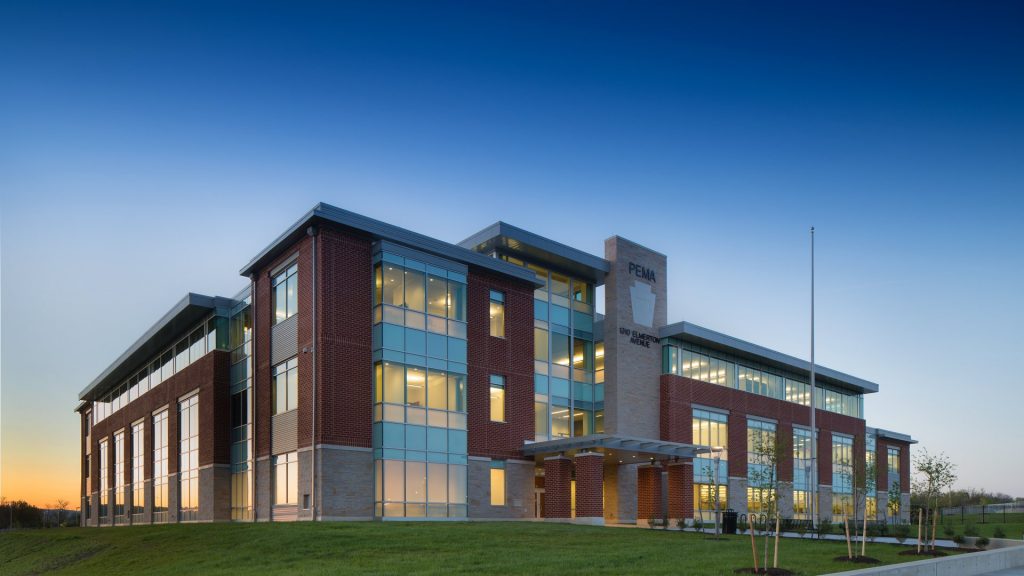
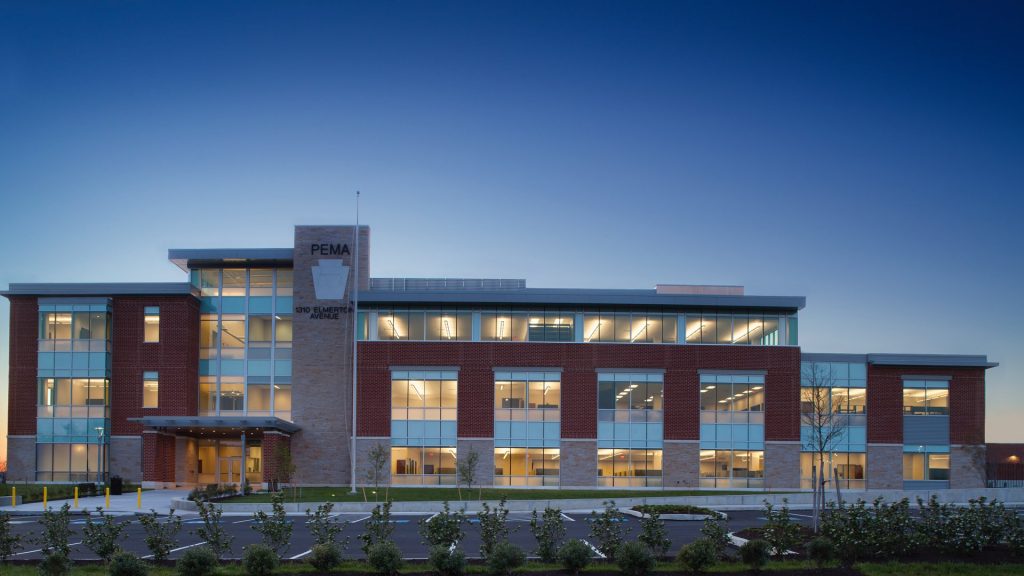
SCHRADERGROUP was honored to receive an award at the AIA AAJ Awards Luncheon held in Jersey City in October 2018.
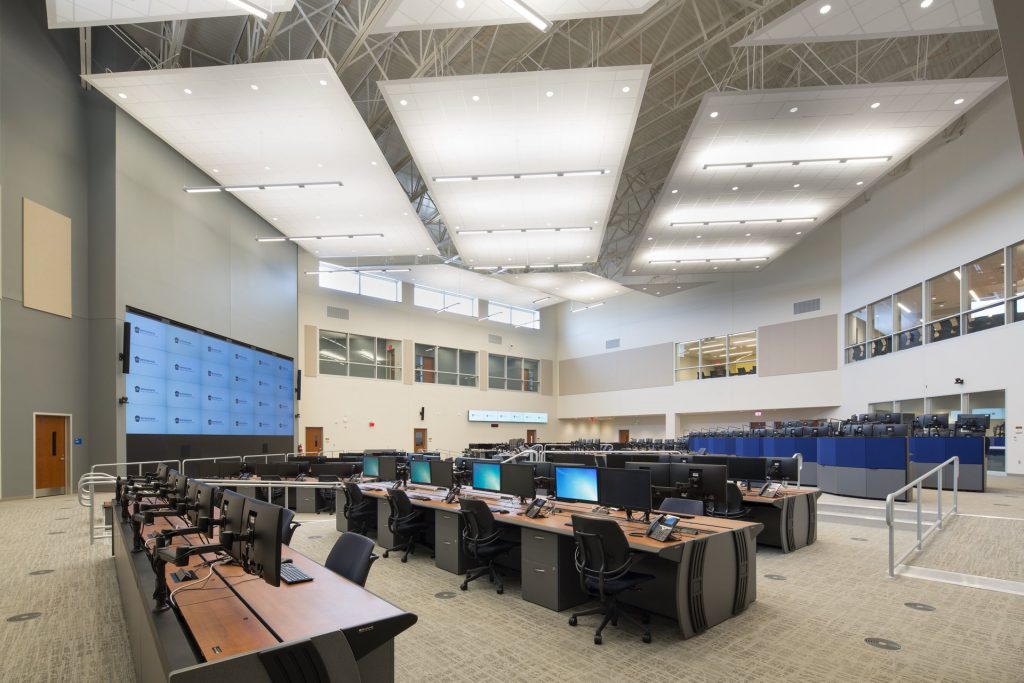
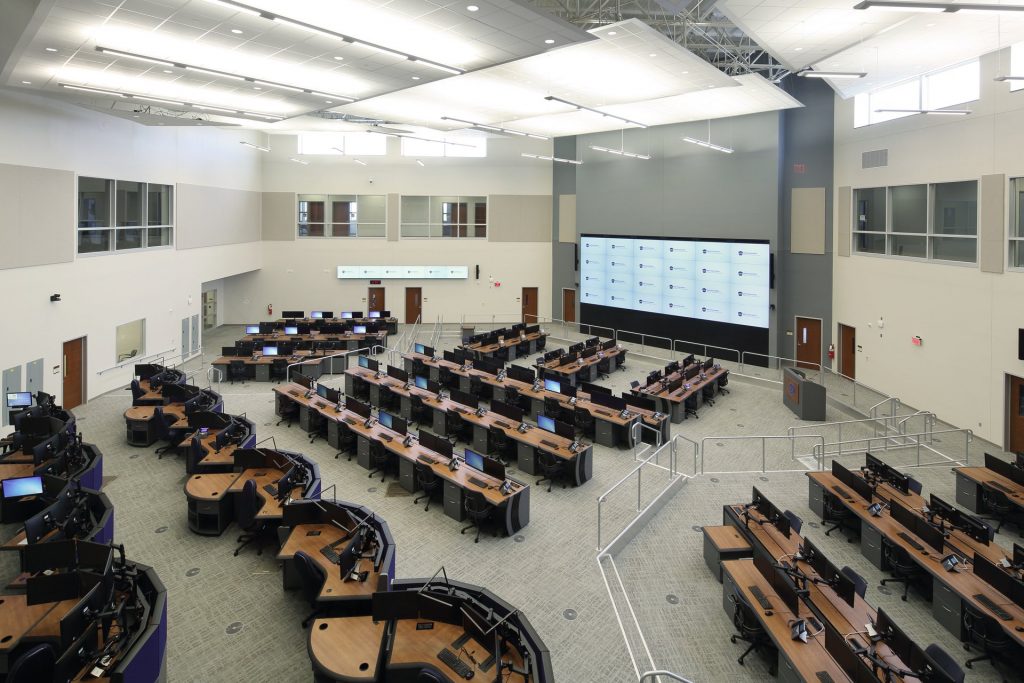
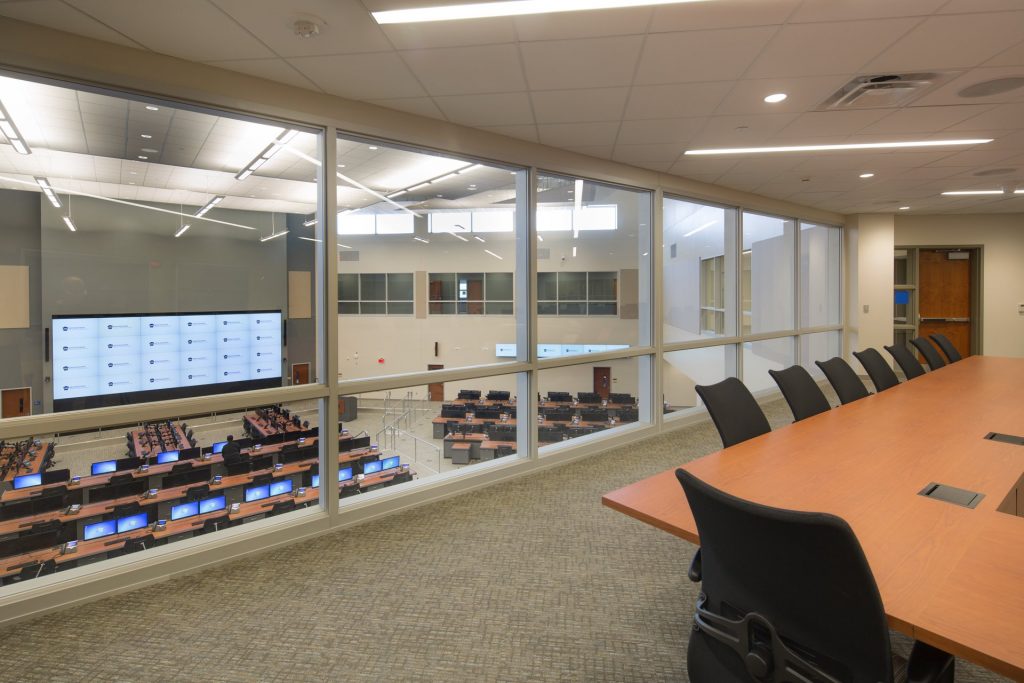
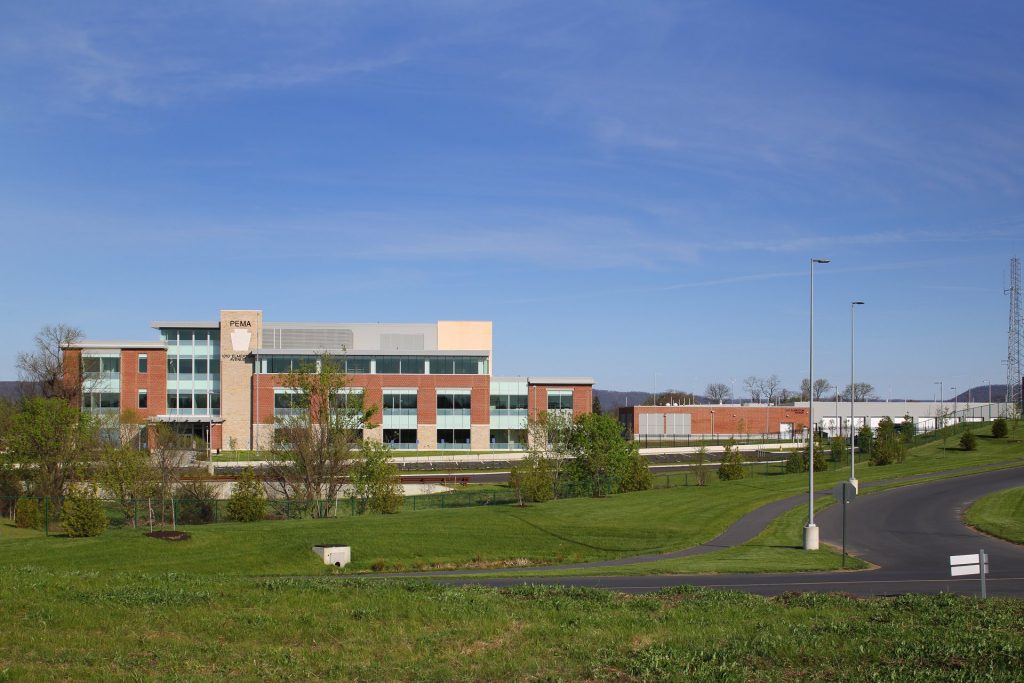
The project that SCHRADERGROUP won the award jointly with AECOMD for was the State Emergency Operations Center, Pennsylvania Emergency Management Agency (PEMA). David Schrader of SCHRADERGROUP (SG) along with Steve Loomis and Amanda Chebalo of Aecom were pleased to accept a received a Justice Facilities Review Award at the AIA AAJ Awards ceremony.
The Team is especially honored to have had the opportunity to partner with the Commonwealth of Pennsylvania on this prestigious project.
You can read more about the PEMA building here.
SCHRADERGROUP Gives Thanks for 2018 and Welcomes the New Year
Time sure flies when you’re having fun!
Everyone at SCHRADERGROUP is grateful for all the opportunities and adventures that we’ve had over the past year. Let’s recap some of those great moments from 2018…
The SCHRADERGROUP Team
Early this year, our Lancaster office moved its location to the downtown area on East King Street, in the middle of all the action in Lancaster city.
We congratulated Eric Weiss and Kelly Ryan for becoming registered Architects in Pennsylvania as well as Jeff Rothermel for becoming a registered Structural Engineer. We welcomed back Paige Geldrich, our previous summer intern, as our newest Architectural Designer. We also recognized five years of dedication to SCHRADERGROUP (SG) from Principals, Harry Pettoni and Tom Forsberg, Architects, Eric Weiss and Kelly Ryan, and Marketing Associate, Rachel Dougherty.
Community Engagement
Senior Project Manager, Danielle V. Hoffer, generously lent her time and experience to Hatboro-Horsham School District by participating in their girls’ STEM talk, Blair Mill Elementary School’s “Tiny House” project, the School District’s Career Fair, the School District’s Statistic Fair and the School District’s Networking Event.
Project Manager and Architect, Dan D’Amico, visited Upper Merion Area School District’s elementary schools to discuss designing spaces for everyone (accessibility) and classrooms for the future.
Project Architect, Kelly Ryan, volunteered her time to help teach students how to cook with the Vetri Cooking Lab program.
Managing Partner, David Schrader, had the opportunity to talk to the students at Penn State’s Blue and White Society sharing his life and professional experiences as an Architect and managing his own firm. He also discussed sustainability with a panel of Doctoral Candidates at Arcadia University and published thoughts on “What We Understand About the Next Generation of Learning Environments” on our SG blog. He also published thoughts on “Changing the Face of Education” in Learning by Design Magazine.
Conferences and Events
The SG team made exciting new connections at various conferences and events we attended this year.
We enjoyed connecting with future architects and designers at PSU’s Stuckeman School’s Career Day—an event at which our attendance can always be counted on.
As always, we loved seeing familiar faces and meeting new people in the academic community at the PASBO, PSBA, A4LE, Maryland ASBO and DVASBO annual conferences.
We also enjoyed meeting and speaking with members of the Communications, Emergency Operations and the Law Enforcement communities during our exhibition and attendance at various Public Safety conferences including IACP, APCO, NSA and NENA.
Awards and Recognition
With tremendous support from our clients, we’re proud to announce a number of awards and recognition our projects have earned over the past year.
Phoenixville Area School District’s new Early Learning Center and Manavon Elementary School received four separate Outstanding Design awards from Learning by Design and American School & University magazines. For more detail, check out Learning by Design’s 2018 spring issue here and 2018 fall issue here; American School & University’s August issue and their November-December issue here.
Bristol Township School District’s Brookwood, Mill Creek, and Keystone Elementary Schools were featured in Sherwin William’s STIR magazine. STIR praised us for our ability to “create an inviting and beautiful environment that the District and its children are proud of.”
The State Emergency Operations Center that SG and AECOM designed and built together for the Pennsylvania Emergency Management Agency also received an AIA AAJ Justice Facilities award from the American Institute of Architects. Further, South Korean delegates took a tour of the Emergency Operations Center to view its state-of-art technology and facility design.
We received word that a young student created a perspective painting of the Hayshire Elementary School that we previously designed for Central York School District. It’s wonderful to see our designs appreciated by students!
We were delighted to have our firm profile featured in Learning by Design’s summer issue as well as ranking #95 in Engineering News-Record MidAtlantic’s Top Design Firms of 2018 and ranking #38 in the Architect Magazine’s Top 50 Firms in Business.
David Schrader earned Fellowship recognition this year for his service with the Association for Learning Environments (A4LE). He also reflected on his time with A4LE and the organization’s international accomplishments in an article in Learning Spaces Magazine. Though David’s role as Chairman came to a close this past year, he remains an active, contributing member of A4LE and supports the new Chairman and Board Members in their mission to improve the environments in which children learn.
Beginnings and Next Chapters
We began a grand journey for the construction of Hatboro-Horsham School District’s Crooked Billet Elementary School, Springfield Township School District’s newest Early Learning Center with groundbreaking ceremonies as well as Springfield School District’s, in Delaware County, newest High School.
We welcomed the opening of Cherry Hill Elementary/Middle School with a Ribbon cutting with officials from Baltimore City Public Schools. We celebrated the completion of Upper Merion Area School District’s two new Elementary Schools: Caley and Gulph in King of Prussia. We finished construction of Council Rock School District’s newly renovated Holland Middle School. We are also proud to see the completion of the Phelps School Athletic Facility, renovations to Circle of Seasons Charter School, and the renovations to Palmyra Middle School.

We thank you for all the adventures we’ve had during 2018 and are excited for more opportunities in the new year!
From all of us at SCHRADERGROUP
Phoenixville Area Early Learning Center and Manavon Elementary School Receives an Outstanding Design Award from American School & University’s 2018 Architectural Portfolio Issue
SCHRADERGROUP (SG)’s Phoenixville Area Early Learning Center and Manavon Elementary School project received another Outstanding Design award from American School & University magazine. This time in the 2018 Architectural Portfolio, November-December issue.
“The nation’s school and university administrators, as well as education architects, turn to American School & University for how-to features, insight, industry exclusive reports and research on the planning, design, construction, retrofit, operations, maintenance, security and management of education facilities. AS&U’s mission is to continue serving as the voice of the industry – not just reporting events, but also helping to shape the rapidly growing and evolving education facilities and business market. AS&U delivers important insight to today’s decision makers.”
The Phoenixville Area Early Learning Center and Manavon Elementary School is located in Phoexniville Area School District in Phoenixville, Pennsylvania. The building was opened in 2017 and is a source of pride for the School District.
Read more about the PASD school here.
You can read the issue online here.
School District of Springfield Township Marks the Beginning of Their New Early Learning Center Construction with a Groundbreaking Ceremony
SCHRADERGROUP attended School District of Springfield Township’s groundbreaking ceremony for the new K-2 Early Learning Center in Erdenheim, Pennsylvania.
More than 200 people from the community joined the School District to celebrate the groundbreaking for the new school. Big smiles radiated from all as Board Members, Project Team Members, Parents and future students dug into the site with their hard hats on. Dr. Nancy Hacker, Superintendent of schools, thanked the community and those who have worked diligently on the new school for their efforts. She, fellow Board Members and local representatives expressed appreciation for the teamwork required to get to this point.
SCHRADERGROUP is equally grateful and excited for this project’s success and will diligently continue to support its journey.
Check out our project page on this highly anticipated project here.
SCHRADERGROUP Senior Project Manager attends Hatboro-Horsham School District Community Networking Event
The Hatboro-Horsham School District hosted a Business Networking and Partnership Event at the Hatboro-Horsham High School. SCHRADERGROUP’s Senior Project Manager, Danielle V. Hoffer, joined community business leaders in the area to share what is happening in the District and to personally experience the “WOW” teachers and students are creating in the classrooms and beyond. Principal Dennis Williams engaged the group in a team building exercise and spoke eloquently on the future of education and how learning styles have changed to prepare students for the future workforce.
Superintendent Dr. Curtis Griffin was excited to present the design of the new Crooked Billet Elementary School. Working with the SCHRADERGROUP team (led by Managing Partner, David Schrader, Danielle V. Hoffer and Project Manager, Devin Bradbury), the new school was designed to respond to project-based learning styles with small and large group collaboration areas in the academic wing. The public areas, including the gymnasium and cafeteria with a central stage, offer space for a variety of school and public venues. The old Crooked Billet Elementary School has already been demolished and the new building is starting to come up out of the ground.
Just one of the many positive changes that is happening in the Hatboro-Horsham School District that SCHRADERGROUP is excited about.
Check out Crooked Billet’s Groundbreaking event here.
And our project page on Crooked Billet here.
SCHRADERGROUP participates in an exciting Groundbreaking Ceremony for the New Crooked Billet Elementary School in the Hatboro-Horsham School District
SCHRADERGROUP is excited to have attended the Hatboro-Horsham School District’s Groundbreaking Ceremony for the District’s New Crooked Billet Elementary School.
Marking the beginning of the construction process for the new school, the School District and Community are excited to begin the journey to welcome students to the facility in 2020. The Crooked Billet Elementary School has a special place in the heart of its local community, being a place of history and a home for many.
The proposed facility is exciting in several ways. The Crooked Billet monument and the history rotunda will commemorate the Revolutionary War event that the school is named after. Students will enter the building by passing the monument and then will be immersed in history in the central rotunda. Once in the learning environment clusters, students will be greeted by teachers in 21st century learning environments consisting of team project areas surrounded by classroom and small group spaces. This facility is truly revolutionary in a multitude of ways!
The SG team is pleased to partner with the Hatboro-Horsham School District and the community on this highly anticipated educational facility.
You can watch HHSD’s Groundbreaking Ceremony here.
Congratulations to the Council Rock School District on its Newly Renovated Holland Middle School!
SCHRADERGROUP is excited to have attended Council Rock School District’s Dedication Ceremony for the newly renovated Holland Middle School.
Dr. Robert Fraser, the Superintendent of Schools for Council Rock School District, articulated it best when he welcomed the audience to the “newly renovated, expanded and beautiful”–Holland Middle School… A school that belongs to everyone at the Council Rock Community and a school to be proud of”.
This project represents a tremendous transformation. Many areas of the facility were stripped to the concrete structure and rebuilt as a contemporary facility with 21st Century Learning spaces. Program additions to the current middle school include: an auditorium with balcony seating, new spaces for music, an auxiliary gymnasium, fitness room, additional classrooms and a new administration area. The interior of the building was completely renovated while the exterior of the building was updated with a new, contemporary skin—with new windows that introduce daylight throughout the facility.
SG is proud to have had the opportunity to partner with the Council Rock School District, to design a LEED Gold certified learning environment. The students of the Council Rock School District deserve this facility!
You can watch Dr. Fraser’s speech here.
SCHRADERGROUP Receives an Award of “Outstanding Project” in Learning by Design’s Fall Issue for the Phoenixville Area School District’s Early Learning Center and Manavon Elementary School
Phoenixville Area School District (PASD)’s Early Learning Center and Manavon Elementary School received an Outstanding Project award in Learning by Design’s Fall issue.
“…the premier source for education design and innovation excellence. Published three times each year in April, June and October, this prestigious magazine recognizes the nation’s preeminent architectural firms by publishing outstanding pre-K to 12 and college/university projects.”
The new 152,000 SF Early Learning Center and Elementary School is designed to support two specific grade structures in a “school within a school” format: Grades K-1 in an Early Learning Center, and Elementary grades 2-5. The new building was opened in 2017 and has been very well received by the community.
A primary goal for the facility is to create a focus on literacy and learning in a non-standard learning environment. In response, the design places the media and technology center at the core of the facility with all other functions radiating from it. This balance of the building seeks to minimize circulation space by maximize the use of those areas as learning environment.
SG is proud to have partnered with PASD on this ground breaking project.
Read more and see more photos of the Phoenixville Area Early Learning Center and Manavon Elementary School here.
You can read the Learning by Design Fall issue here.
What We Understand About the Next Generation of Learning Environments
by David L. Schrader, AIA, LEED AP, LE Fellow
Globally, the learning process is evolving at different rates. With respect to change in the educational process, the old idioms that apply are: “The more things change, the more they stay the same,” and “Change is inevitable.” These opposing thoughts can reflect that differing rate of learning process as it evolves throughout the world. And yet, learning spaces must somehow universally provide the container within which learning occurs, regardless of the evolution of the educational process.
As planners and designers, the best that we can do to react to this confusing rate of change is to provide for flexibility. Flexibility does not necessarily need to mean large, open, sterile spaces. Evolving educational trends are marrying flexibility in space through a wide variety of solutions. Internationally, we are seeing spaces that provide for varying opportunities for learning.
Among important learner traits for the future, researchers say that the next generation of learners will grow to their fullest potential if their educational experience includes honing their skills in the “Four-C’s”: Communication, Collaboration, Creativity, and Critical Thinking. The “Four C’s” require that the learner be provided with spaces for instruction, research, development of projects (making), and presentation of ideas. In support of these learning styles, we are seeing a move towards flexibility that makes the most use of space, and supports intriguing solutions that include but are not limited to the following:
-
- Learning Stairs
-
- Media Center
-
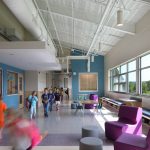
- Learning and Collaborative Spaces in Corridors and Hallways
-
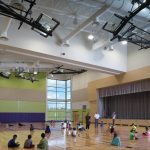
- Multi-purpose Spaces
-
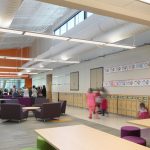
- Spaces with flexibility for different types of learning
-
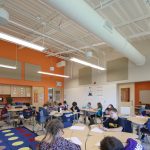
- Community-based learning
STE(A)M Centers – What conversation about next generation learning environments would be complete without mention of STE(A)M (Science, Technology, Engineering, Art and Math). The tradition of a science lab in a cluster or in a department, an art room in the visual or performing arts hallway, and the technology education space down by the loading dock is no longer. Fresh clusters of technology spaces gathered around a central project area have replaced those old configurations with the intent of inspiring technological growth for our learners, thus promoting an increase in those entering the technology fields so critical to the world’s development.
Student Commons – Combining public interest in more efficient footprints with stimulating social opportunities drives this merging of space. Treatment of the library and cafeteria as spaces used only three periods per day no longer makes sense when confronted with the need to create more efficient multi-use spaces. The commons are an any type of learning-anytime-anywhere space, supporting the various social interaction levels required by today’s learner and their technological needs. While commons are borrowed from their big brother in the higher education setting, when designed correctly with technology integrated, they have a commanding place in the K-12 environment.
Elimination of circulation space – School Districts have the interesting challenge of continuing to provide for new and often-mandated programs within the space developed for an educational program of the past. District budgets cry for providing less building square footage than previously available. Internationally, planners and designers are reacting to this unique challenge by further utilizing every square inch of the plan. With the elimination of corridors, the space previously reserved for circulation throughout the building becomes educational or social space. Imaginative solutions to this issue often become the most unique areas of the building.
Elimination of specific learning support and special needs spaces – To eliminate the stigma attached to “going to the space” for those students requiring these services, movement to a push-in environment has become a matter of equity. Everyone is familiar with walking down the hallway of a building of the past and finding educators sitting with individual students outside of the classroom or in custodial closets delivering support learning. The next generation of spaces replaces circulation space with small group and teaming areas throughout the building. Further, with the exception of the most severe of needs, many learning support spaces are being eliminated and are now pushed in to a small group space connected to the classroom or within very close proximity. The “owned” learning support space is being abandoned in favor of a push-in structure with a centralized learning support office area for the educators to call home.
Blending of building communal spaces The Four C’s require that we begin to offer a certain amount of freedom to the student previously not provided in a typical floor plan. Spaces for students to congregate in all levels of social structure from the individual research space to the small group gathering space to the large group interaction space must all be provided as if the learners were gathering in a small town. The more we begin to think about the aggregate of students integrating in the various social groupings provided by the balance of their social settings outside of school, the more successful we will be at replicating the space required for a true social learning environment.
Support of the Four C’ s through new spaces for researching, communing, building, making, learning, and presentation – Planners and designers have begun to recognize that the typically structured 750-1000 s.f. rectangular classroom with 22-30 desks facing a learning surface gathered on both sides of a hallway is no longer adequate for the next generation. We can now begin to investigate customized and flexible spaces that allow for these specific areas of development. Technological support spaces for research, commons areas for project development and socialization, maker spaces for production, and presentation areas for the conveying of student knowledge will become the new vocabulary of spaces around which a learning community will be built. These spaces and many other new and unique environments, influenced by higher education and industry, will become the new norms around which planners and designers of the next generation will base their work.
Architects and planners are globally are developing designs and integrating these unique uses of space in educational facilities for the next generation of learning. The educational outcomes of these many solutions are also being studied for their educational relevance (educational commissioning) by many. As planners and designers, we do recognize that “with change, things will not stay the same!”